
5 Tips for Making Morning Work Actually Work in Your Classroom
Those first few minutes of the school day can set the tone for the day… but they can also be a little chaotic!
Kids are unpacking, you're taking attendance, someone needs help with something, and somehow you're also supposed to get everyone settled and ready to learn.
That's one reason I liked having morning work when I was teaching. I wanted my students to have something meaningful to work on while I handled all those little morning tasks.
But morning work can also become just another worksheet that students rush through… or worse, something that creates more work for you.
If you want your morning work routine to actually work FOR you, here are five things I'd keep in mind.
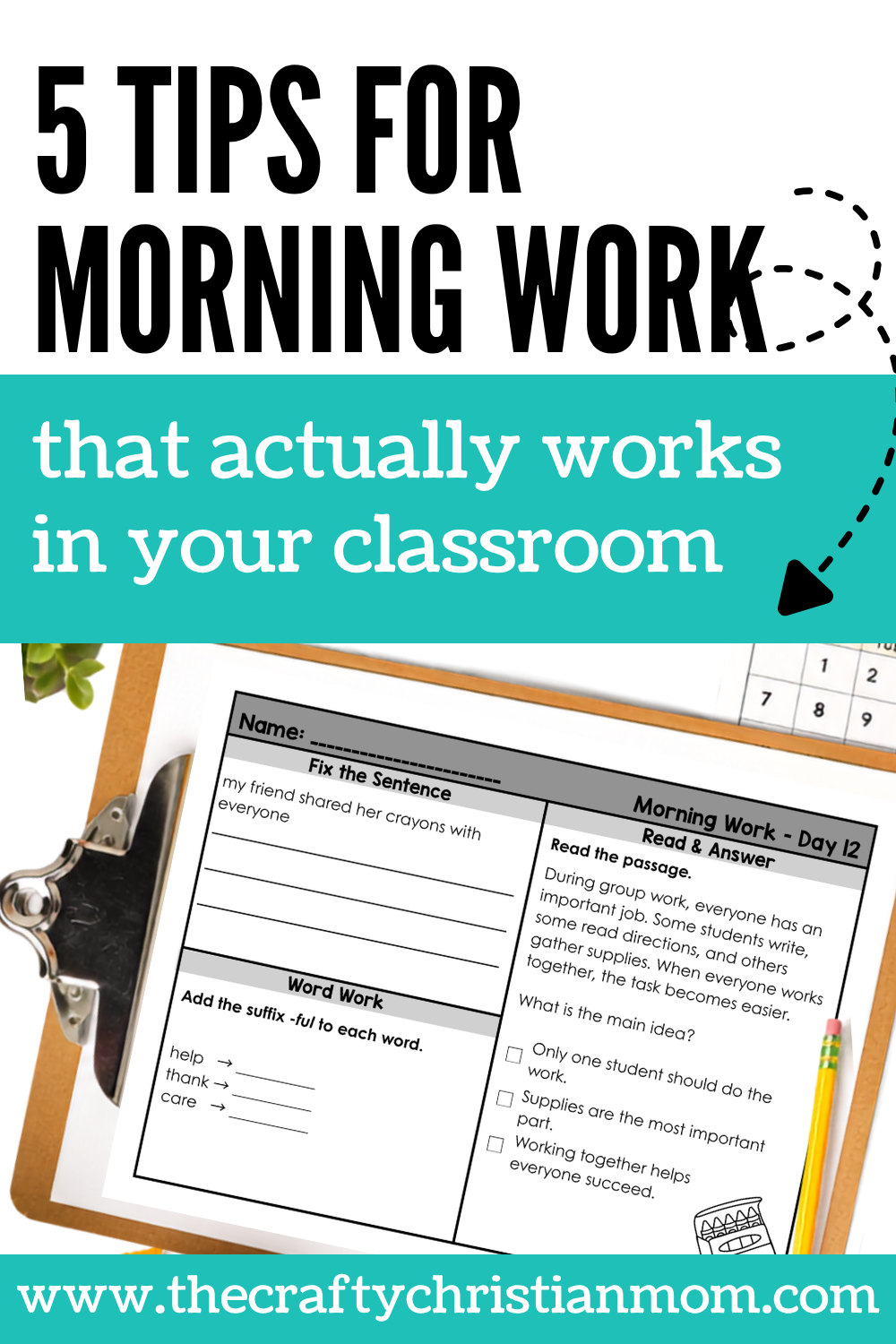
1. Make It Predictable
If you want students to work independently in the morning, they need to know what to expect.
You don't want to spend the first five minutes of every morning answering:
"What are we doing?"
"Where do I get my work?"
"What do I do when I'm finished?"
Having a consistent routine makes a huge difference.
Maybe students unpack, turn in homework, grab their morning work, and get started. Whatever your routine looks like, try to keep it as consistent as possible.
The goal is for students to eventually walk into the classroom and know exactly what they need to do without waiting for you to give them directions.
And when this part works, that's a win for everyone. Your students get a chance to ease into the school day, and you get a few minutes to take care of all those things that need your attention before the first lesson begins.
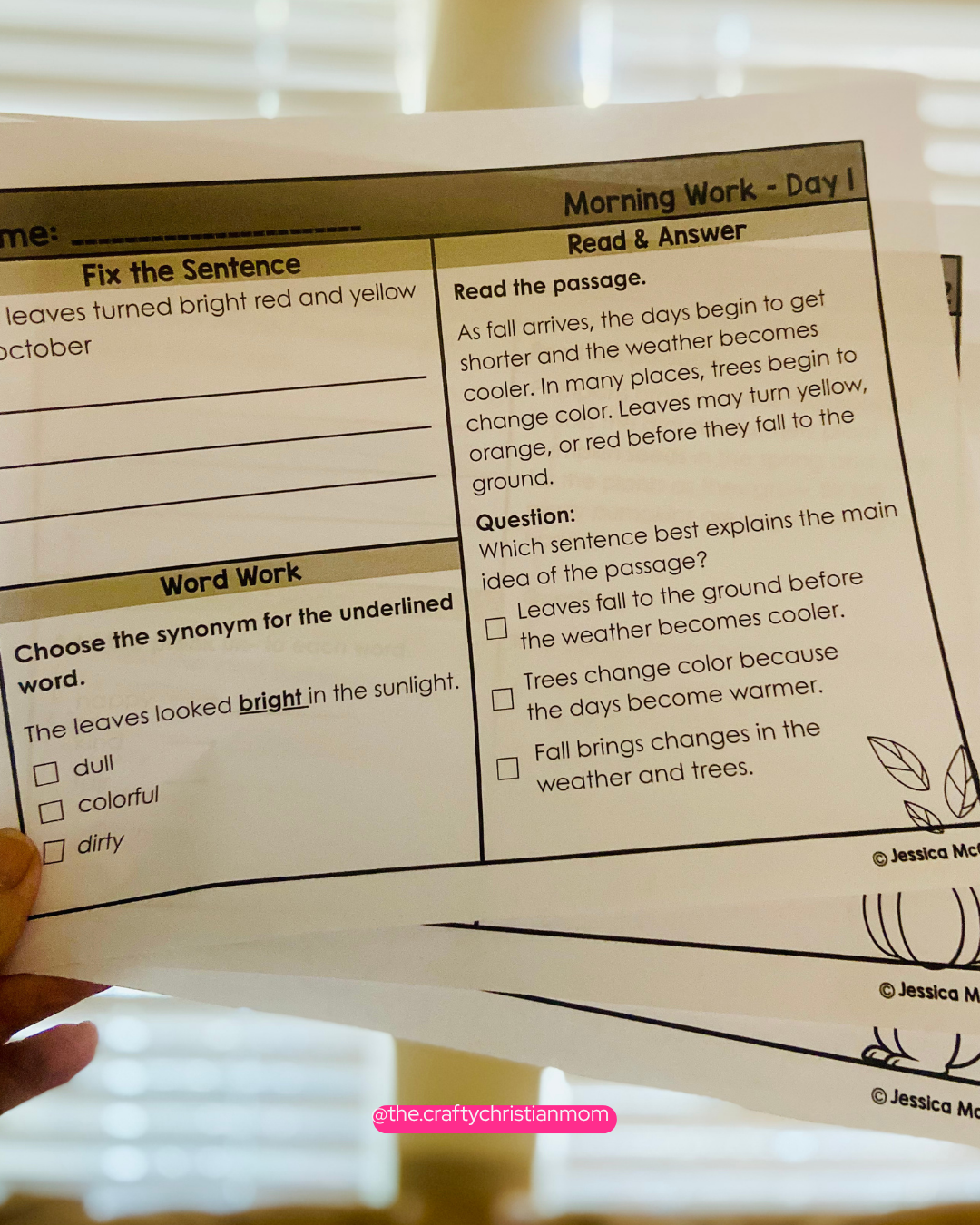
2. Use Morning Work for Review, Not New Learning
I wouldn't use morning work to teach a skill for the first time.
Instead, use those few minutes to bring back skills you've already taught.
This is why I love spiral review. Students might practice a grammar skill they learned last week, answer a question about a short reading passage, review vocabulary, or revisit another ELA skill you've already worked on.
Students need more than one opportunity to practice a skill before you can expect them to really master it. Morning work gives you an easy place to fit in that extra practice without having to spend an entire lesson on review.
And because students have already been introduced to the skills, they're much more likely to be able to work independently.
3. Keep It Short (and Have a Plan for Early Finishers)
This is especially important if your students don't all arrive at the same time.
Maybe some students come in 15 minutes before the bell. Others arrive right at the start of the day. You may have students eating breakfast, coming from different buses, or simply taking longer to get unpacked and settled.
Because of that, I don't think morning work needs to be something that every student has to finish before you move on with the day.
I prefer keeping it short enough that most students can complete it in about 5-10 minutes.
But then you need to answer another question:
What should students do when they're finished?
My favorite simple option is independent reading.
Students who finish their morning work can grab a book and read while their classmates finish up. That gives early finishers something worthwhile to do instead of wandering around the room asking, "What do I do now?"
It also means students who arrive a little later aren't automatically behind. They can work on the morning assignment for the time they have and then transition to the next part of the morning routine.
Morning work doesn't have to fill every available minute.
Give students a short, meaningful task and a clear next step for when they're finished.
Want to try this approach in your own classroom? Grab my free 3-day 3rd grade ELA morning work sampler.

4. Make It Easy to Check
Let's not forget about you!
Morning work shouldn't create another giant stack of papers for you to grade.
If students spend 10 minutes completing their morning work and you spend 30 minutes checking it, that's probably not a great use of your time.
Look for ways to make checking quick.
You could review answers together as a class, project an answer key, have students self-check when appropriate, or simply discuss the questions that students struggled with.
And remember that you don't necessarily have to put a grade on every morning work assignment.
Sometimes you're looking at the answers simply to get a quick idea of where your students are.
Which leads to the last tip...
5. Use It to Inform Your Teaching
Don't just look at whether students finished. Pay attention to what they're getting right and what they're missing.
Did several students miss the same grammar question?
Are students struggling with a certain type of reading question?
Is a skill you taught a couple of weeks ago already starting to disappear?
Those mistakes can tell you something.
If half your class misses the same question, that's probably worth another look during your ELA block.
You don't need to create a formal data-tracking system for every morning work page. Just pay attention to patterns.
You're getting a quick snapshot of what your students remember and what they may need a little more practice with.
What Should Good Morning Work Actually Look Like?
For me, effective morning work doesn't need to be complicated.
It should:
Be predictable enough for students to complete independently
Review skills you've already taught
Be short enough to fit into a busy morning
Have a clear next step for students who finish early
Be easy for you to check
Give you some information about what your students know
You're not trying to squeeze one more giant assignment into the school day.
You want those first few minutes to give students meaningful practice while you get a chance to get your classroom, and yourself, ready for the day.
And once students know the routine, it can become one less thing you have to think about every morning.
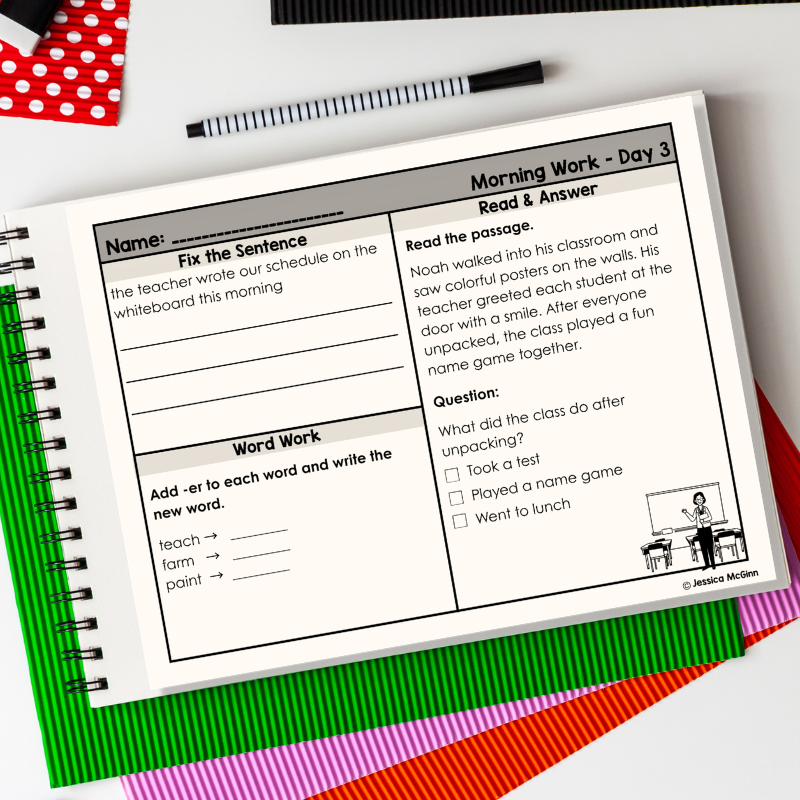
Looking for Ready-to-Use 3rd Grade Morning Work?
If you're looking for morning work that takes some of the planning off your plate, I've created monthly 3rd grade ELA spiral review morning work designed for exactly this kind of routine.
Each month includes short daily practice covering skills students have already been learning, so you can print it, hand it out, and get your students started without creating a new morning assignment every night.
[Shop 3rd Grade Morning Work on Teachers Pay Teachers →]
Not ready to grab a full month? You can also try my free 3-day morning work sampler.
Final Thoughts
Morning work doesn't have to be complicated to be useful. A predictable routine, a few minutes of meaningful review, and a plan for what students do when they're finished can make those first few minutes of the day run much more smoothly.
And if your current morning work routine feels a little more like "Here's a worksheet. Good luck!" than an intentional part of your school day, you don't have to change everything at once.
Try changing one thing this week. You might be surprised by how much smoother your mornings feel!
Looking for more ready-to-use classroom resources? Explore my collection of ELA, STEM, and other classroom resources.
